Filter
4
Topics
Information Needs in Disasters & Humanitarian Crises
1
Media Use: Disasters & Humanitarian Crises
1
Disaster & Humanitarian Crisis Reporting
1
Disaster & Humanitarian Crisis Information Management
1
Disaster Risk & Preparedness Communication, Disaster Prevention Communication
1
Early Warning: Disasters
1
Media Assistance: Disasters & Humanitarian Crises
1
Climate Change Communication, Climate Journalism
1
Language
Document type
Authors & Publishers
Media focus
Publication Years
Journals
Output Type
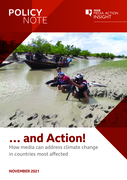
… And Action! How Media Can Address Climate Change in Countries Most Affected
London: BBC Media Action (2021), 39 pp.

Should I Stay or Should I Go Now? Why Risk Communication is the Critical Component in Disaster Risk Reduction
Progress in Disaster Science, volume 8 (2020), 4 pp.
"Even the most sophisticated forecasting models and advanced early warning systems can be rendered ineffective if the information is not communicated clearly, on time, and in a way that allows the end-user to consider options and act appropriately. These challenges not only apply to fast onset hazar
...

Still Left in the Dark? How People in Emergencies Use Communication to Survive – and How Humanitarian Agencies Can Help
London: BBC Media Action (2012), 15 pp.
"In 2008, a BBC World Service Trust policy briefing argued that people affected by earthquakes, floods or other emergencies often lacked the information they needed to survive and that this only added to their stress and anxiety. Left in the Dark: the unmet need for information in humanitarian emerg
...
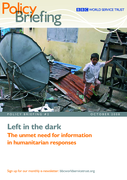
Left in the Dark: The Unmet Need for Information in Humanitarian Responses
BBC World Service Trust (2008), 8 pp.
"When crisis or disaster strikes, people need help. They need, shelter, food, water and safety. They need these things rapidly and effectively. Modern humanitarian responses have become more effi cient and effective at providing these things. This policy briefing argues that people need information
...