Filter
26
Featured
Free Access
18
Top Insights
2
Topics
Image Ethics, Ethics in Photojournalism
6
NGOs & Civil Society Organizations: Communication Strategies & Practices
4
Development Aid Reporting
4
Poverty & Impoverished People: Reporting & Media Representation
3
Development Organizations: Communication Strategies & Media Representation
2
Development Communication, Communication for Development (C4D)
2
Communicating Development Projects, Media in Development Programmes
2
Evaluation Reporting & Communicating Results
2
Africa: Foreign Media Representation & Image Abroad
2
Developing Countries Reporting & Representation in Foreign / International Media
2
Stereotypes in Media & Communication
2
Celebrity Humanitarianism
1
Comedies
1
Ethics in Public Relations
1
Social Media Marketing & Digital Public Relations
1
Storytelling
1
Development Education
1
United States Agency for International Development (USAID)
1
International NGOs
1
Development Communication: Monitoring & Evaluation
1
Edutainment Television Programmes
1
Instagram
1
UNICEF
1
Integrated Regional Information Networks (IRIN)
1
Photojournalism
1
Social Photography
1
Accountability & Transparency
1
Stakeholders, Stakeholder Analysis, Stakeholder Participation
1
Science Communication & Research Dissemination
1
Visual Communication
1
Language
Document type
Countries / Regions
Authors & Publishers
Media focus
Publication Years
Methods applied
Journals
Output Type
Charity representations of distant others: An analysis of UK charity visual communications in direct mail campaigns
University of East Anglia, School of Global Development (2025), 29 pp.
"In this phase of our research on charity advertising, we aimed to examine how INGOs represent distant others in direct mail communications compared to newspaper advertisements, building on findings from earlier studies. While the direct mail format offers greater potential for nuanced storytelling,
...
Ethical judgments of poverty depictions in the context of charity advertising?
Cognition, volume 245, issue 105735 (2024), [no pag.]
"Aid organizations, activists, and the media often use graphic depictions of human suffering to elicit sympathy and aid. While effective, critics have condemned these practices as exploitative, objectifying, and deceptive, ultimately labeling them ‘poverty porn.’ This paper examines people's eth
...
"Die kenianische, auch mit deutschem Geld produzierte Serie "Country Queen"läuft auf Arte und weltweit auf Netflix. Sie ist raffiniert erzählt - und ein Glücksfall für das globale Lagerfeuer." (Einleitung)
Panser les solidarités internationales: (re)penser la communication solidaire
Paris: L'Harmattan (2022), 278 pp.

Ethical Traditions in Humanitarian Photography and the Challenges of the Digital Age: Four Conversations with Canadian Communications Officers
Journal of Humanitarian Affairs, volume 3, issue 2 (2021), pp. 57-64
"As the production, content, and display of humanitarian images faced the requirements of digital media, humanitarian organizations struggled to keep equitable visual practices. Media specialists reflect on past and current uses of images in four Canadian agencies: the Canadian Red Cross, the Multic
...


Humanitarian Relief and Development Organizations’ Stakeholder Targeting Communication on Social Media and Beyond
Voluntas, volume 32 (2021), pp. 120-135
"Nonprofit scholars have long considered stakeholder targeting communication (STC), an important mechanism of organizational accountability to meet stakeholders’ diverse interests and needs. However, research has yet to systematically examine the antecedents and outcomes of organizations’ STC to
...
"Throughout the 19th and early 20th century, the predecessors of NGOs—pressure groups—tried to advance their cause by cultivating close relations with the mainstream press, and/or publishing their own periodicals. But from the late 20th century onward, many NGOs started routinely producing their
...

Hierarchies of Editorial Power in International NGOs
Journalism Studies, volume 20, issue 12 (2019), pp. 1764-1781
"International non-governmental organisations (INGOs) have long been recognised as major contributors to the construction of Africa's image in the West through their impact stories, fundraising and advocacy campaigns. Yet although there has been considerable academic inquiry into these messages, res
...
Communication in International Development: Doing Good or Looking Good?
Top Insights
London; New York: Routledge (2018), xiv, 182 pp.
"International development stakeholders harness communication with two broad purposes: to do good, via communication for development and media assistance, and to communicate do-gooding, via public relations and information. This book unpacks various ways in which different efforts to do good are com
...
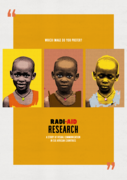
"Across the board, respondents called for NGOs to diversify their strategies. As well as children, they wanted to see images of parents and grandparents, local development workers and doctors, for example. They highlighted the importance of maintaining the dignity of the individuals portrayed, espec
...

Die Spitze des Eisbergs: Spendenwerbung der internationalen Hilfsorganisationen - Kritik und Alternativen
Initiative Schwarze Menschen in Deutschland (ISD); Glokal e.V. (2017), 35 pp.
"Das berüchtigte Bild des hungernden, nackten, ungeschützten Kindes ist ein Leitmotiv in der humanitären Hilfe, das bis heute kollektive und individuelle Vorstellungswelten im Globalen Norden formt. Die Bilderwelten, die die Krisen im Globalen Süden porträtieren, sind geprägt von einer kolonia
...
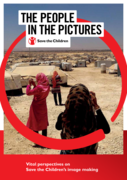
The People in the Pictures: Vital Perspectives on Save the Children’s Image Making. A Research Project to Understand How Contributors and Their Communities Experience and Perceive Save the Children’s Communications and its Image-Making Process
Top Insights
Save the Children (2017), xi, 81 pp.
"Debates about the visual representations of global poverty have been going on for many years, yet the experiences and views of those featured have been notably absent. 'The People in the Pictures' addresses that gap. Save the Children commissioned research in the UK, Jordan, Bangladesh and Niger, t
...
Representing ‘development’ on Instagram: Questioning ‘what’, ‘who’, and ‘how’ of development in digital space
Journal of International Communication, volume 27, issue 2 (2017), pp. 192-214
"Development institutions communicate about development through mediated communication strategies. The advent of image-intensive digital spaces such as Instagram has facilitated communication for these institutions, making ‘development’ more accessible to the public. However, the representation
...
Storytelling for Social Change: Leveraging Documentary and Comedy for Public Engagement in Global Poverty
Journal of Communication, volume 67, issue 5 (2017), pp. 678-701
"Narrative is essential for public engagement with global poverty. Stand Up Planet, a documentary about global development, was produced to evaluate the effects of a little-utilized nonfiction comedy narrative. Using a pretest–posttest experimental design, this study examines shifts in U.S. audien
...

The Use of Stereotypical Images of Africa in Fundraising Campaigns
European Scientific Journal, volume 9, issue 11 (2013), pp. 20-31
"This article critically examines Unicef’s campaign in Slovenia, aimed at helping children in Ruanda, which caused huge public support in terms of the raised finances and visibility, but it also provoked a serious opposition from African people living in Slovenia and some academics. The article in
...

Visualizers of Solidarity: Organizational Politics in Humanitarian and International Development NGOs
Visual Communication, volume 12, issue 3 (2013), pp. 295-314
"Discussion of the visual politics of solidarity, in relation specifically to the representation of suffering and development, has been grounded in analysis of images. This paper seeks to expand this debate by exploring the organizational politics that shape and are shaped by these images. The paper
...

Creating Killer Facts and Graphics
Oxfam (2012), 4 pp.
"‘Killer facts’ are those punchy, memorable, headline-grabbing statistics that make reports special. They cut through the technicalities to fire people up about changing the world. They are picked up and repeated endlessly by the media and politicians. They are known as ‘killer’ facts becaus
...
Building Public Awareness of Development: Communicators, Educators and Evaluation
Paris: OECD Development Centre (2008), 38 pp.
"Donors and practitioners could make greater use of evaluations, and their findings, to increase the effectiveness and results of public communication, advocacy and education about global development. The first step is to understand the evaluation process and respect its rigours. The second is to ac
...