Filter
90
Featured
Free Access
89
Inspiring Practice
2
Top Insights
7
Topics
Safety of Journalists, Safety Risks of Media Workers
27
Journalists Dealing with Risks & Threats, Resilience & Wellbeing of Media Workers
11
Digital & Information Literacy
9
Female Journalists & Media Workers
7
Media & Information Literacy
7
War Reporting
6
Children's Television Programmes
5
Media Literacy: Children
5
Conflict Reporting, Armed Conflict Reporting
5
Democracy / Democratization and Media
5
Sexuality: Media Representation, Sexually Explicit Media Content, Pornography
4
Public Service Broadcasting
4
Youth Media
4
Media Use: Children
3
Child Protection, Protection of Minors
3
Media Reception & Effects: Children
3
Freedom of Expression
3
Harassment & Intimidation of Journalists
3
Killings of Journalists & Media Personnel
3
Media Freedom, Press Freedom
3
Conflict-Sensitive & Peace Journalism
3
Development Communication, Communication for Development (C4D)
3
Gender Representation & Stereotypes in the Media
3
Health Communication
3
Foreign Correspondents
3
Safety of Journalists: Law & Public Policies
3
Media Literacy: Youth
3
Public Spheres
3
Communication & Media Indicators
3
Digital Divide, Digital Inequalities
2
Civic Engagement, Citizen Participation, Civil Society & Media
2
Media Advocacy, Media Activism
2
Media Use: Youth
2
Children and Media
2
Children's Media
2
Violence in the Media: Effects on Children
2
Press Freedom & Communication Rights Violations
2
United Nations Plan of Action on the Safety of Journalists and the Issue of Impunity
2
Citizen Journalism, Community Journalism
2
Conflict Areas: Media Systems, Media Landscapes, Role of Media
2
Extremism & Terrorism Reporting
2
Communication for Social Change
2
Communication Among Disadvantaged Persons
2
Television Markets
2
Communication for Sustainable Development
2
Gender and Media, Gender and Communication
2
HIV / AIDS Communication
2
Globalisation: Impact on (Local) Media & Communication
2
Globalisation of Media
2
Journalism Education & Training
2
Journalistic Quality
2
Photojournalism
2
Stereotypes in Media & Communication
2
Media Literacy: Curricula
2
Media Landscapes, Media Systems, Media Situation in General
2
Small States: Media Systems & Media Landscapes
2
Civic Engagement, Citizen & Community Participation
2
Public Media, State Media
2
Research in Media & Communication
2
Inequalities
2
Mobile Phones, Smartphones
2
Youth: Media Representation & Reporting
2
Advertising Literacy: Children
1
Advertising Markets & Industries
1
Children & Advertising
1
Digital Advertising, Online Advertising
1
Empowerment
1
Audiences & Users
1
Digital & Social Media Use, Internet Use
1
Digital & Social Media Use: Children
1
Gaming: Uses & Effects
1
Interactive Radio: Audience Participation, Interaction & Feedback
1
Media Diaries
1
Television Use: Children
1
Media Use: Families
1
Television Use: Youth
1
Mobile Phone Use
1
News Consumption & Information Sources of Media Users
1
Trust in the Media, Credibility of Media
1
Child Protection Online
1
Digital Media Socialisation
1
Children: Media Representation & Reporting
1
Children: Early Childhood, Toddlers, Preschoolers
1
Children's Rights
1
Gaming: Children
1
Celebrities, Idols, Stars
1
Development Education: Films
1
Ethnographic Films
1
Censorship
1
Impunity for Crimes Against Journalists & Media Personnel
1
Self-Censorship
1
Government Communication Strategies
1
Military: Communication Strategies & Practices
1
Community Media
1
Participatory Communication
1
Boko Haram
1
Islamic State (Political-Religious Extremist Organization)
1
Humanitarian Interventions
1
Iraq War (2003)
1
Conflict Prevention, Mediation & Reconciliation: Role of Media
1
Extremist & Terrorist Digital / Social Media Presence
1
Extremist & Terrorist Communication Strategies and Media
1
Extremist Recruitment through Media
1
Foreign Conflict Reporting, International War Reporting
1
Media Law & Regulation in Conflict Areas
1
Trauma: Media Representation & Reporting
1
Violence in the Media: Effects on Youth
1
Violence in the Media: Video Games
1
Media Monitoring, Media Observatories
1
Culture and Communication, Culture and Media
1
Arts
1
Theatre for Development
1
Culture and Development
1
Gaming: Youth
1
Popular Cultures
1
Popular Religious Cultures & Practices
1
Sustainable Development Goals (SDG)
1
Development Aid Reporting
1
Development Education: Use & Role of Media
1
Entertainment Education, Edutainment
1
Social Media in Political Communication
1
Internet Markets
1
Religion in Social Media
1
ICTs and Development
1
Disinformation, Misinformation, Fake News
1
Media Concentration
1
Radio Markets
1
Political Economy of Media
1
Television Economics
1
Small-Scale Industries
1
Educational Television
1
Gaming, Video Games
1
Addiction to Media & Video Games, Effects of Media on Mental Health
1
Sports Reporting
1
Television Entertainment, Television Entertainment Programmes
1
Soap Operas & Telenovelas
1
Tourism & Travel
1
Climate Change Communication, Climate Journalism
1
Ethics in Media & Communication
1
Journalism Ethics
1
Bribery & Corruption in Journalism
1
Objectivity & Veracity of Reporting
1
Evaluation Criteria, Evaluation Indicators
1
Gender-Sensitive Journalism
1
Good Practice Examples
1
Food / Nutrition Communication & Media Representation
1
Indigenous Communication
1
Indigenous Journalists & Communicators
1
Indigenous Television Broadcasting
1
Intercultural Dialogue
1
International Communication
1
Foreign Television Programmes
1
Glocalization of Media
1
Transnational & Comparative Communication Research
1
UNESCO
1
United Nations (UN)
1
Journalism
1
Investigative Journalism
1
Journalism Studies & Research
1
Journalism Studies: Research Projects
1
Journalists: Professional Identity & Values
1
Local Journalism
1
News
1
Local News
1
Political Reporting
1
Prostitution Reporting & Media Representation
1
Religion: Media Representation
1
Religious Journalism, Religion News
1
Working Conditions of Journalists & Media Personnel
1
Media & Communication Policies
1
Television Policies
1
Financing Media, Financial Media Management
1
Financing Public Service Media
1
Clientelism
1
Politics and Media
1
Media Capture, Vested Political & Other Interests in the Media
1
Political Communication
1
Newspapers
1
Radio Debates, Radio Talk Shows, Call-In Radio Programmes
1
Media Effects
1
Everyday Life
1
Television Reception & Effects
1
Religion and Communication
1
Islamic Cultures: Role of Media
1
Communication & Media Research Associations & Networks
1
Research Methods
1
Ethnographic Research
1
Social Change
1
Marginality, Marginalized Groups
1
Social Classes
1
Mobile Phone Use for Social Purposes, Mobiles for Development
1
SMS
1
Reality Television Programmes & Daily Talks
1
Theories of Communication & Media
1
Signs, Signals, Semiotics
1
Youth and Media
1
Youth & Digital Media
1
Youth Television Programmes
1
Youth Films & Videos
1
Language
Document type
Countries / Regions
Authors & Publishers
Media focus
Publication Years
Methods applied
Output Type
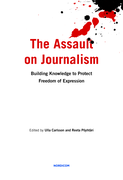
The Assault on Journalism. Building Knowledge to Protect Freedom of Expression
Top Insights
Göteborg: Nordicom (2017), 363 pp.
"To support joint efforts to protect journalism, there is a growing need for research-based knowledge. Acknowledging this need, the aim of this publication is to highlight and fuel journalist safety as a field of research, to encourage worldwide participation, as well as to inspire further dialogues
...
A Story Bigger than Your Life? The safety challenges of journalists reporting on democratization conflicts
In: The Assault on Journalism. Building Knowledge to Protect Freedom of Expression
Göteborg: Nordicom (2017), pp. 289-302
"This chapter investigates safety challenges journalists face when reporting on democratization conflicts and their impact on journalistic work. It builds on a comparative case study within the EU-funded project “Media, Conflict and Democratisation” (MeCoDEM), which explores journalistic work pr
...
Unwarranted Interference, Fear and Self-censorship among Journalists in Council of Europe Member States
In: The Assault on Journalism. Building Knowledge to Protect Freedom of Expression
Göteborg: Nordicom (2017), pp. 221-226
"Journalists may be exposed to a number of risk factors for unwarranted interference. This is often compounded by a culture of impunity. The extent of unwarranted interference, the experience of fear associated with such interference, and the consequent possibility of self-censorship among journalis
...
Violence against Indigenous Journalists in Colombia and Latin America
In: The Assault on Journalism. Building Knowledge to Protect Freedom of Expression
Göteborg: Nordicom (2017), pp. 191-204
"This chapter explores mechanisms and causes that put indigenous journalists at risk in Latin America. It seeks to explain the nature of “indigenous journalism” as well as the differences and similarities between “indigenous journalism” and the journalisms found in mainstream media in Latin
...
The Cost of Truth Telling in India: Reporting in the Context of Intolerance
In: The Assault on Journalism. Building Knowledge to Protect Freedom of Expression
Göteborg: Nordicom (2017), pp. 87-92
"I would like to begin by stating the obvious. Any way forward has to be based on a clear understanding of the possibilities for change in the environment and context of the press in India. While there is a lot to celebrate about the press in India, its institutional location within the market, its
...
The Psychological Wellbeing of Iranian Journalists
In: The Assault on Journalism. Building Knowledge to Protect Freedom of Expression
Göteborg: Nordicom (2017), pp. 185-190
"Objectives: To determine the emotional wellbeing of journalists who work in Iran. Methods: A website was established and journalists in newsrooms in Iran and the Diaspora were given information to access the site. Responses were received from 114 journalists (76 per per cent cent). The mean age was
...
Freedom under Pressure: Threats to journalists’ safety in Pakistan
In: The Assault on Journalism. Building Knowledge to Protect Freedom of Expression
Göteborg: Nordicom (2017), pp. 323-328
"This study aims to explore the level of journalists’ safety and investigates different types of threats that affect their work (actions) within the context (environment) of Pakistan. Drawing on the new institutionalism theory, this study posits that Pakistani journalists work in an unsafe institu
...
How Unsafe Contexts and Overlapping Risks Influence Journalism Practice: Evidence from a survey of Mexican journalists
In: The Assault on Journalism. Building Knowledge to Protect Freedom of Expression
Göteborg: Nordicom (2017), pp. 303-318
"Journalists in many countries work in contexts of continuous risk, but few empirical studies identify how these conditions influence practice or measure the relative influence of different kinds of risk. This study asks a national sample of Mexican journalists to report use of several measures to a
...
Australian News Photographers, Safety and Trauma
In: The Assault on Journalism. Building Knowledge to Protect Freedom of Expression
Göteborg: Nordicom (2017), pp. 231-234
"This chapter illuminates new understanding about the dangers experienced by Australian news photographers on international and domestic assignments. Using oral history methodology, the interviews with 60 present and former Australian newspaper photographers revealed a litany of psychologically and
...
Risk and Resilience among Journalists Covering Potentially Traumatic Events
In: The Assault on Journalism. Building Knowledge to Protect Freedom of Expression
Göteborg: Nordicom (2017), pp. 235-240
"Journalists covering crises are at high risk of experiencing potentially traumatic events. This chapter presents a study with 375 journalists who covered the 2011 terror attack in Norway. The purpose was to investigate whether social support (SS) was related to psychological distress (posttraumatic
...
Gendering War and Peace Journalism: New challenges for media research
In: The Assault on Journalism. Building Knowledge to Protect Freedom of Expression
Göteborg: Nordicom (2017), pp. 61-70
"The article addresses in what way gender matters when dealing with war – and peace journalism. Issues discussed are to what extent the experiences of male and female reporters differ when they cover stories from the front line, especially regarding safety and working conditions. One important que
...
Setting a New Research Agenda: The establishment of a journalism safety research network
In: The Assault on Journalism. Building Knowledge to Protect Freedom of Expression
Göteborg: Nordicom (2017), pp. 109-112
"At a UNESCO research conference on the safety of journalists during the celebrations of World Press Freedom Day in Helsinki, Finland on 3 and 4 May 2016, UNESCO declared “that the Safety of Journalists paved the way for academic research cooperation”. To advance such cooperation the Centre for
...
Measuring journalism safety. Methodological challenges
In: The Assault on Journalism. Building Knowledge to Protect Freedom of Expression
Göteborg: Nordicom (2017), pp. 129-140
"The effectiveness of any measures taken to address the problems of journalism safety ultimately depends on our ability to understand the complex nature and dynamics of risk to journalists. Mapping the scale of the problem through the systematic collection of data on threats over time is therefore a
...
Journalist Killings and the Responsibility to Report
In: The Assault on Journalism. Building Knowledge to Protect Freedom of Expression
Göteborg: Nordicom (2017), pp. 21-32
"More journalists are being killed and threatened around the world than at any time before. How do we account for these disturbing trends and why do journalists increasingly put themselves in harm’s way? This chapter argues that if we are to better understand the motivations of journalists and the
...
Why the World Became Concerned with Journalistic Safety, and Why the Issue Will Continue to Attract Attention
In: The Assault on Journalism. Building Knowledge to Protect Freedom of Expression
Göteborg: Nordicom (2017), pp. 33-44
"There is a history to why the challenge of securing safety for journalism has become a prominent issue in many parts of the world. This is partly because of increased attacks on journalists, but it is also a function of global developments that have afforded space for the issue to come to fore as a
...
The Dangers of Sports Journalism
In: The Assault on Journalism. Building Knowledge to Protect Freedom of Expression
Göteborg: Nordicom (2017), pp. 205-220
"According to The Committee to Protect Journalists, 2 per cent of all journalists killed since 1992 worked on the sports beat. At present, however, we have limited knowledge of the specific dangers faced by sports journalists. This chapter presents findings from exploratory research on 78 reports of
...
Explorations in an Emerging Research Field
In: The Assault on Journalism. Building Knowledge to Protect Freedom of Expression
Göteborg: Nordicom (2017), pp. 141-146
"When discussing the safety of journalists, it is quite natural that the focus is foremost on practitioners: those professional journalists, citizen journalists and other media workers who report about incidents, processes and their consequences from troubled sites around the world. Their accounts o
...
Collaboration is the future: Doing research in the network era
In: The Assault on Journalism. Building Knowledge to Protect Freedom of Expression
Göteborg: Nordicom (2017), pp. 71-80
"The study of journalists’ safety around the world is one of the areas that clearly require international collaboration. This chapter highlights three distinct models of scientific collaboration: the centralized, the correspondent, and the coordinated cooperation model. The Worlds of Journalism St
...

A Country without Mercy: Afghan Journalists Caught in Crossfires
In: The Assault on Journalism. Building Knowledge to Protect Freedom of Expression
Göteborg: Nordicom (2017), pp. 81-86
"In the last Afghan solar year (22 March 2015 – 21 March 2016), twelve journalists and media workers were killed, exceeding any previous year in recent history. In June 2016, the US photographer David Gilkey and his interpreter, journalist Zabihullah Tamanna, were killed in a Taliban attack in Maj
...
The Protection of Citizen Journalists During Armed Conflicts
In: The Assault on Journalism. Building Knowledge to Protect Freedom of Expression
Göteborg: Nordicom (2017), pp. 267-278
"Digital technologies are changing the way in which journalism is performed. Today, reports by citizen journalists (CJs) are extremely relevant when traditional journalists cannot access hostile and dangerous areas. According to the Committee to Protect Journalists, 90% of murdered reporters were lo
...