Filter
194
Featured
Free Access
161
Top Insights
7
Topics
Surveillance, Surveillance Technologies, Spyware
25
Authoritarian Regimes: Government Communication Strategies
20
Freedom of Expression Online, Internet Freedom
19
Digital Activism, Cyber Advocacy
18
Access to Internet & Digital Communications
17
Press Freedom & Communication Rights Violations
15
Internet / Social Media Law & Regulation
14
Internet Shutdowns
13
Digital & Social Media Use, Internet Use
11
Internet Governance, Internet Policies
11
Social Media
9
Government Communication Strategies
8
Digitalisation, Online Communication & Democracy / Democratization
8
Cybersecurity, Digital Safety, Privacy, Right to Privacy
7
Freedom of Expression
7
Internet Censorship Circumvention Tools & Strategies
7
Democratization & Digital Media / Social Media
7
Disinformation, Misinformation, Fake News
7
Media Law & Regulation
7
Authoritarian Regimes: Media Systems & Landscapes
6
Media Freedom, Press Freedom
6
Political Blogging
6
Civic Engagement, Citizen Participation, Civil Society & Digital Communication
5
Independent & Oppositional Media in Authoritarian Regimes
5
Digital Political Communication
5
Blogging, Blogs
5
Facebook
5
Civic Engagement, Citizen Participation, Civil Society & Media
4
Cybercrimes
4
Social Media in Political Communication
4
China: Transnational Information Operations, International Broadcasting, Public Diplomacy
4
Civil Society
4
Digital & Social Media Use: Youth
3
Digital Rights
3
Media / Communication Control
3
Violence Against Journalists & Media Personnel
3
Citizen Journalism, Community Journalism
3
Big Digital Platforms, Big Tech Companies
3
Google
3
Internet
3
Weibo (Microblogging Website, China)
3
Digitalization, Digital Transformation
3
Defamation of Religion (Blasphemy)
3
Democracy / Democratization and Media
3
Muslim Digital Media & Online Communities
3
Mobile Phones, Smartphones
3
Access to Media & Information
2
Access to Public Information, Freedom of Information, Right to Information
2
Digital Divide, Digital Inequalities
2
Authoritarian Regimes, Dictatorships
2
Child Abuse: Digital Media
2
Communication Rights
2
Censorship
2
Facial Recognition, Biometric Surveillance
2
Public Diplomacy, Cultural Diplomacy
2
ICT / Internet Projects (Development Aid)
2
Digital Media Landscapes
2
E-Governance, E-Democracy
2
Internet and Politics
2
Media Assistance: Digital Journalism & Social Media
2
Online Communication
2
Content Moderation & Regulation: Social Media
2
Twitter & Microblogs
2
Gender and ICTs / Internet
2
Information Society
2
Uyghurs, Uighurs
2
Countering Hate Speech, Disinformation & Propaganda
2
Digital Economies & Markets
2
Gender and Media, Gender and Communication
2
Transnational Broadcasting, International Broadcasting
2
Foreign Policies
2
Safety of Journalists, Safety Risks of Media Workers
2
Safety of Journalists: Law & Public Policies
2
Media Law & Regulation: Muslim Countries
2
Election Campaigns: Social Media
2
Islam and Communication
2
Islamist Communications & Media
2
Telecommunication Infrastructure
2
Access to Information Laws, Right to Information Regulation
1
Mobile Phone Advocacy & Campaigns
1
Social Movements: Communication Strategies & Practices
1
Media & ICT Use in Authoritarian Regimes / Dictatorships
1
Mobile Phone Use
1
Trust in the Media, Credibility of Media
1
Data Protection: Law & Regulation
1
Editorial Independence
1
Exile Journalism, Exile Media
1
Intellectual Property
1
Open Licensing, Creative Commons, Public Domain
1
Plagiarism
1
Censorship Circumvention Tools & Strategies
1
Harassment & Intimidation of Journalists
1
Impunity for Crimes Against Journalists & Media Personnel
1
Foreign Government Communication Interventions
1
Alternative Communication & Media
1
Community Radios
1
Conflicts & Wars: Roles of Digital Technologies & Conflict Narratives in Social Media
1
Extremism & Terrorism Reporting
1
Hate Speech, Hate Speech in Social Media
1
Information Warfare, Psychological Warfare
1
Information For All Programme (IFAP/UNESCO)
1
Development and Media
1
Algorithms & Big Data
1
Darknet
1
Data Governance, Data Justice, Data Sovereignty
1
Digital Ethics, AI Ethics, Social Media Ethics, Data & Information Ethics
1
Digital Inclusion
1
Digital Media, Internet & Religion
1
Digital Research Methods
1
Indigenous Digital & Social Media Communication
1
Internet and Development
1
Internet Business Management
1
WeChat (Messaging, Social Media & Mobile Payment App, China)
1
Electronic Commerce
1
Digital Journalism, Online Journalism
1
Internet Markets
1
Journalistic Social Media Use
1
Telegram
1
Video & Foto Online Communities
1
Instagram
1
YouTube
1
VK (Russian Social Network)
1
Ethnic / Minority Online Communities & Websites
1
Digital Economies, Digital Societies
1
Artificial Intelligence
1
ICTs and Development
1
ICT Development Assistance
1
ICT Development Assistance: Donors
1
ICT Industries & Markets
1
Diaspora Media
1
Earthquakes, Floods, Tsunamis, Natural Disasters
1
Deepfakes (Realistic-Looking Media Content that has been Modified, Generated or Falsified Using AI)
1
Media Ownership
1
Foreign Media Investments, Foreign Media Ownership
1
Media Viability & Financial Sustainability
1
Political Economy of Media
1
Gaming, Video Games
1
Accountability & Transparency of the Media
1
Countering Defamation & Harassment
1
Defamation Law & Regulation
1
Female Journalists & Media Workers
1
Feminism & Communication
1
Feminist Media
1
Gender-Based Harassment, Intimidation & Violence
1
History (General)
1
China: Foreign Media Representation & Image Abroad
1
Foreign ICT & Telecommunication Investments & Ownership
1
United Nations (UN)
1
Investigative Journalism
1
Protests, Protest Movements, Protest Reporting & Media Representation
1
Kiswahili
1
Media Assistance: Interaction with Foreign Policies
1
COVID-19 Pandemic: Effects on Journalism, Media & Communication
1
Law, Legislation, Judiciary (General)
1
Religious Freedom
1
Change & Process Management
1
Corporate Social Responsibility
1
Civic Engagement, Citizen & Community Participation
1
Shrinking Spaces for Civil Society & Political Actors
1
Politics and Media
1
Media Capture, Vested Political & Other Interests in the Media
1
Political Parties: Communication Strategies
1
Propaganda
1
Media Effects
1
Everyday Life
1
Manipulation
1
Uses-And-Gratifications Approach
1
Software
1
Technology Transfer
1
Internet Service Providers (ISPs)
1
Mobile Phone Apps
1
State Influence on ICT & Telecommunication Markets
1
Telecommunication Companies, Mobile Phone & Fixed Line Operators
1
Language
Document type
Countries / Regions
Authors & Publishers
Media focus
Publication Years
Methods applied
Journals
Output Type
Freedom on the Net 2012: A Global Assessment of Internet and Digital Media
Washington, DC; New York: Freedom House (2012), 657 pp.
"This report is the third in a series of comprehensive studies of internet freedom around the globe and covers developments in 47 countries that occurred between January 2011 and May 2012. Over 50 researchers, nearly all based in the countries they analyzed, contributed to the project by researching
...
National Web Studies: Mapping Iran Online
Philadelphia: Annenberg School for Communication, Center for Global Communication Studies (CGCS) (2012), 25 pp.
"Instead of defining a priori the types of websites to be included in a national web, the approach put forward here makes use of web devices (platforms and engines) that purport to provide (ranked) lists of URLs relevant to a particular country. Once gathered in such a manner, the websites are studi
...
Neither Here Nor There: Turkmenistan's Digital Doldrums
Ottawa: SecDev Group (2012), 21 pp.
"Turkmenistan is slowly emerging from decades of darkness. President Gurbanguli Berdymukhamedov has vowed to modernize the country by encouraging the uptake of new technology for economic development and more ef!cient governance. Hundreds of thousands of Turkmen citizens are now online. However, the
...
Opening Closed Regimes: Civil Society, Information Infrastructure, and Political Islam
In: Digital Media and Political Engagement Worldwide: A Comparative Study
New York: Cambridge University Press (2012), pp. 200-220
"Ruling elites often try to co-opt civil society groups, and in times of political or military crises they can attempt to control the national information infrastructure. But a defining feature of civil society is independence from the authority of the state, even in countries such as Saudi Arabia a
...

Controlling the Internet in China: The Real Story
Convergence, volume 18, issue 4 (2012), pp. 403-425
"This article examines the complexity of the internet control mechanisms in China by breaking it down to five layers, ranging from the government, service and content providers to webmasters and individual users. It inquires into the logic of the control mechanisms and how such logic is naturalized
...
Internetzensur in China: Aufbau und Grenzen des Chinesischen Kontrollsystems
Wiesbaden: VS Verlag für Sozialwissenschaften (2011), 246 pp.
"Eine Serie von Fallstudien – unter anderem zur Funktion von Blogs und Microblogs als „bottom- up journalism“ und zu Aktivitätsfeldern des chinesischen „hacktivism“ – verdeutlicht, welches Potenzial politischer Mobilisierung auch im chinesischen Kontext in der internetbasierten Kommunik
...
Iran und die neuen Medien: Herausforderungen für den Auslandsrundfunk;Iran and the New Media: Challenges for International Broadcasters
Stuttgart: Institut für Auslandsbeziehungen (ifa) (2011), 126 pp.
"Im ersten Block analysieren Vertreter der iranischen Social-Media-Szene die Rolle des Web 2.0 in Iran von seinen Anfängen bis heute. Der iranische Blogger Mehdi Mohseni umreißt die Social-Media-Aktivitäten der Parteien rund um den Präsidentschaftswahlkampf 2009 und die Folgen für die iranische
...

La política de Internet desde una perspectiva internacional: Seis informes nacionales
Sankt Augustin; Berlin: Konrad-Adenauer-Stiftung (KAS) (2011), 108 pp.

Netzpolitik aus internationaler Perspektive: Länderberichte aus den USA, Großbritannien, Spanien, Polen, Indien und Korea
Sankt Augustin; Berlin: Konrad-Adenauer-Stiftung (KAS) (2011), 114 pp.
"Die Forderung nach Sicherheit im Internet, besonders in Hinblick auf die persönlichen Daten, die Gewährung der Freiheit dieses Mediums ohne staatliche Eingriffe, die Diskussion um adäquate Formen des Urheberrechts und seiner Durchsetzung sowie eine Fokussierung auf die Risiken verbunden mit eine
...
Predicting Political Discussion in a Censored Virtual Environment
Political Communication, volume 28, issue 3 (2011), pp. 341-356
"Contrary to the optimistic view that the Internet would promote democracy in authoritarian countries like China, the pervasive political apathy among younger generations calls for a closer examination of micro-level individual political participation. This study contributes to the nascent body of e
...

Cyberactivism in the Egyptian Revolution: How Civic Engagement and Citizen Journalism Tilted the Balance
Arab Media & Society, issue 13 (2011), 37 pp.
"The Egyptian revolution was characterized by the instrumental use of social media, especially Facebook, Twitter, YouTube, and text messaging by protesters, to bring about political change and democratic transformation. This article focuses on how these new types of media acted as effective tools fo
...


Global Information Society Watch 2011: Internet Rights and Democratisation. Focus on Freedom of Expression and Association Online
Association for Progressive Communications (APC); Hivos (2011), 273 pp.
"In the year of the Arab uprisings Global Information Society Watch 2011 investigates how governments and internet and mobile phone companies are trying to restrict freedom online – and how citizens are responding to this using the very same technologies. Everyone is familiar with the stories of E
...

Chinas digitale Revolution: Politische Kommunikation in der virtuellen Welt
KAS Auslandsinformationen, issue 6 (2010), pp. 89-102
"Das chinesische Festland zählte im Sommer 2009 338 Millionen Internetanwender. Dies bezieht sich auf diejenigen „User", die über sechs Jahre alt sind und sich in den letzten sechs Monaten im Internet einloggten. Das übertrifft die 312 Millionen „Worldwideweb"-Nutzer der Europäischen Union u
...


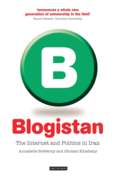
Blogistan: The Internet and Politics in Iran
London; New York: Tauris (2010), xiii, 211 pp.
"The protests unleashed by Iran's disputed presidential election in June 2009 brought the Islamic Republic's vigorous cyber culture to the world's attention. Iran has an estimated 700,000 bloggers, and new media such as Facebook, Twitter and YouTube were thought to have played a key role in spreadin
...
Vertrauen ist gut, Kontrolle besser: Neue Medien und politischer Widerstand
Südostasien, volume 26, issue 1 (2010), 95 pp.