Filter
103
Featured
Free Access
100
Key Guidance
2
Top Insights
1
Topics
Media Freedom, Press Freedom
26
Media Concentration
19
Media Ownership
18
Censorship
10
Press Freedom & Communication Rights Violations
10
Safety of Journalists, Safety Risks of Media Workers
10
Killings of Journalists & Media Personnel
9
Political Economy of Media
8
Media Markets
7
Media Capture, Vested Political & Other Interests in the Media
7
Digital Media Censorship, Control & Filtering, Internet & Social Media Censorship
6
Media / Communication Control
6
Violence Against Journalists & Media Personnel
6
Media Ownership Regulation & Transparency
6
Media Law & Regulation
6
Freedom of Expression
4
Harassment & Intimidation of Journalists
4
Media Landscapes, Media Systems, Media Situation in General
4
War Reporting
3
Cyberbullying, Cyberharassment
3
Internet
3
Government Advertising, State Advertising
2
Exile Journalism, Exile Media
2
State Influence on the Media
2
Conflict Reporting, Armed Conflict Reporting
2
Digital Ethics, AI Ethics, Social Media Ethics, Data & Information Ethics
2
Political Blogging
2
Female Journalists & Media Workers
2
Foreign Correspondents
2
Election Reporting
2
Working Conditions of Journalists & Media Personnel
2
Access to Public Information, Freedom of Information, Right to Information
1
Access to Information Laws, Right to Information Regulation
1
Advertising Markets & Industries
1
Gender Advocacy & Empowerment, Gender Mainstreaming
1
Authoritarian Regimes: Government Communication Strategies
1
Authoritarian Regimes: Media Systems & Landscapes
1
Authoritarian Regimes: Transnational Repression
1
Comics, Cartoons, Caricatures
1
Pentecostal Churches & Communication
1
Communication Rights
1
Cybersecurity, Digital Safety, Privacy, Right to Privacy
1
Encryption, Cryptology
1
Editorial Independence
1
Freedom of Expression Principles
1
Internet Censorship Circumvention Tools & Strategies
1
Indirect Censorship, Soft Censorship
1
Surveillance, Surveillance Technologies, Spyware
1
Government Propaganda
1
Government / State Advertising: Allocation Policies & Regulation
1
Russia-Ukraine War <2014-
1
Crime & Violence Reporting
1
War Propaganda, Propaganda in Conflicts
1
Cybercrimes
1
Blogging, Blogs
1
Artificial Intelligence
1
AI in Journalism & Media
1
Press Distribution
1
Printing Industries
1
Media Market Transparency
1
Climate Change Communication, Climate Journalism
1
Environmental Journalism
1
Defamation Law & Regulation
1
Journalism Ethics
1
Gender-Based Harassment, Intimidation & Violence
1
Gender-Based Online Harassment & Sexual Threats
1
Gender Representation & Stereotypes in the Media
1
Gender-Sensitive Journalism
1
Women's Rights
1
China: Transnational Information Operations, International Broadcasting, Public Diplomacy
1
Russia: Foreign Information Operations, International Broadcasting, Public Diplomacy
1
Investigative Journalism
1
Media Assistance: Journalism Education & Training
1
Journalists
1
Exiled Journalists
1
Journalists Dealing with Risks & Threats, Resilience & Wellbeing of Media Workers
1
Safety of Journalists: Law & Public Policies
1
Drug Trafficking Reporting & Media Representation
1
Local Communication & Media
1
USA: Media Assistance
1
Diversity & Pluralism in Media / Communication
1
National Security Legislation
1
Politics and Media
1
Political Transition and Media
1
Public Media, State Media
1
COVID-19 Pandemic: Economic, Political and Social Effects
1
Language
Document type
Countries / Regions
Authors & Publishers
Media focus
Publication Years
Methods applied
Output Type
Media Ownership Monitor Tanzania
Reporters Without Borders; Media Council of Tanzania (2018), 739 pp.
"Only a few media companies have a predominant market position and thus a potentially high influence on public opinion in Tanzania. Whereas the regulatory framework should in theory safeguard media pluralism and prevent media concentration, it shows considerable gaps in practice. Moreover, the legal
...
Media Ownership Monitor Sri Lanka
Reporters Without Borders; Verité Research (2018), 825 pp.
"Viewership, listenership and readership in the Sri Lankan media market is highly concentrated among a few media owners, many of whom have political affiliations. Limited access to ownership information and a number of regulatory shortcomings pose a further threat to media pluralism in the country."
...
Media Ownership Monitor Lebanon
Reporters Without Borders; Samir Kassir Foundation (2018), 1323 pp.
"The seemingly buzzing Lebanese media market is, in fact, controlled by only a few highly politicized owners that are either directly affiliated with political parties or belong to Lebanese dynasties. Additional threats to media pluralism arise from clear editorial lines defined by politics, close t
...
Mission So Possible: Investigative Journalism in Bulgaria
Paris: Reporters Without Borders (2018), 5 pp.
"For a motivated journalist in Bulgaria it is easy to detect, investigate and collect proof of corruption and abuse of power. But currently, when making their findings public, instead of a gratifying applause, journalists encounter great chances of hitting a wall of silence, facing authorities with
...

Journalists: The Bête Noire of Organized Crime
Paris: Reporters Without Borders (2018), 47 pp.
Online Harassment of Journalists: Attack of the Trolls
Paris: Reporters Without Borders (2018), 36 pp.
"In a new report entitled “Online harassment of journalists: the trolls attack,” Reporters Without Borders (RSF) sheds light on the latest danger for journalists – threats and insults on social networks that are designed to intimidate them into silence. The sources of these threats and insults
...
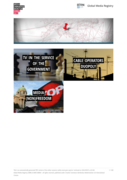
Media Ownership Monitor Serbia
Reporters Without Borders (2017), 549 pp.
"The state has been for year the biggest advertiser in the country. Public money has been spent through its Ministries, institutions, republic agencies, bodies, local self-governments etc on different advertising and sponsorship contracts. The total value of state advertising still remains unknown d
...
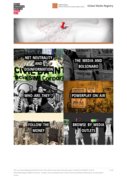
Media Ownership Monitor Brazil
Reporters Without Borders; Intervozes (2017), 925 pp.
"Power in Brazil means family business, both traditionally and to this very day. Dynasties of landowners known as “Colonels” extend their territorial claims to the airwaves, combining economic and political interests with tight control of public opinion. Neither digital technology and the rise o
...

Media Ownership Monitor Ghana
Reporters Without Borders; Media Foundation for West Africa (MFWA) (2017), 567 pp.
"The Media Ownership Monitor (MOM) reveals a high level of audience concentration in various media sectors. An almost maximum concentration was found among the printed press, where the top four media companies (Graphic Communications Group Limited, New Times Corporation, Western Publications Limited
...
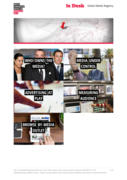
Media Ownership Monitor Morocco
Reporters Without Borders; Le Desk (2017), 618 pp.
"Nine of the 36 media companies involved in Morocco’s most influential media are directly linked to the state, the government or the royal family. Four of them – SOREAD, SNRT, EcoMedias and Horizon Press – are among the most important media companies in terms of turnover and show the potential
...
Cambodia: The Independent Press in Ruins
Paris: Reporters Without Borders (2017), 26 pp.
Veracruz: Journalists and the State of Fear
Paris: Reporters Without Borders (2017), 35 pp.
"While the Turkish media market looks diverse from the outside because of the large numbers of outlets, it is increasingly concentrated in terms of opinion. The Media Ownership Monitor Turkey, carried out with IPS Communication Foundation/ bianet between July and October 2016, shows that the governm
...
Media Ownership Monitor Ukraine
Reporters Without Borders (2016), 611 pp.
"Ukrainian mass media outlets are mostly driven by their owners’ individual interests and thus serve as instruments to securing political and economic power. Corruption and lack of financial transparency further inhibit the healthiness of the country’s media landscape. The Media Ownership Monito
...
Media Ownership Monitor Philippines
Reporters Without Borders (2016), 699 pp.
"Two giant broadcast networks dominate the Philippine media industry both in terms of economic market power and audience reach, which gives them a major potential to shape public opinion. Despite a high number of media outlets and being described as one of the most freewheeling media systems in the
...
Media Ownership Monitor Peru
Reporters Without Borders (2016), 612 pp.
"High levels of revenue and ownership concentration in the media sector pose a threat to freedom of information in Peru. Concentration is also exceptionally high in terms of circulation and audience in the print and digital media sectors. MOM Peru, carried out from September and December 2016, has r
...
Media Ownership Monitor Mongolia
Reporters Without Borders (2016), 847 pp.
"Only one out of ten Mongolian media outlets is actively transparent about its ownership. A majority of them has political affiliations through their founders and / or owners. This limits the important role of media to act as an independent watchdog for democracy. These are some of the main findings
...
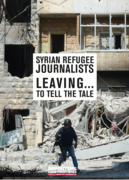
Syrian Refugee Journalists Leaving ... To Tell the Tale
Paris: Reporters Without Borders (2016), 16 pp.
"After the Syrian uprising morphed into an armed struggle, the Syrian government increasingly lost control over vast areas of territory. With the loss of State control, its imposed rule on media faded, enabling media to flourish in those areas. In territories it still controlled, its grip became eve
...
"The Tunisian revolution has left a significant mark on the country’s media landscape, which diversified and played an important role in the transition process. Media diversity, however, does not guarantee the independence of information per se, especially if it remains to be dominated by politica
...