Filter
7
Topics
Storytelling
3
Films
2
Buddhism and Communication
2
Hinduism and Communication
2
Islamist Communications & Media
2
Visual Communication
2
Film & Video Advocacy / Activism
1
Cinema
1
National Cinemas, National Film Production
1
Oral Cultures & Traditions, Oral History, Oral Testimonies
1
Extremist & Terrorist Communication Strategies and Media
1
Photography
1
Political Communication
1
Political Parties: Communication Strategies
1
Islam and Communication
1
Postcolonial & Decolonial Communication Approaches
1
Language
Countries / Regions
Authors & Publishers
Media focus
Publication Years
Output Type
The Hizbullah Phenomenon: Politics and Communication
New York: Oxford University Press (2014), vii, 229 pp.
Qissa and Popular Hindi Cinema
In: Storytelling in World Cinemas. Vol. 2: Contexts
London; New York: Wallflower Press (2013), pp. 183-194
"While acknowledging the contribution of the dominant Hindi Sanskritic narrative tradition to the shaping of popular Hindi cinema, this chapter aims to explore the alternative narrative streams that have governed storytelling in Hindi films, particularly the Perso-Arabic legacy of the qissa and dast
...
Storytelling in World Cinemas. Vol. 2: Contexts
London; New York: Wallflower Press (2013), x, 198 pp.
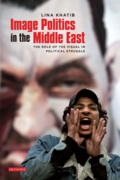
Image Politics in the Middle East: The Role of the Visual in Political Struggle
London; New York: Tauris (2013), xii, 248 pp.
"Politics in the Middle East is now ‘seen’ and the image is playing a central part in processes of political struggle. This is the first book in the literature to engage directly with these changing ways of communicating politics in the region - and particularly with the politics of the image, i
...
Clouds of Unknowing: Buddhism and Bhutanese Cinema
In: Storytelling in World Cinemas. Vol. 2: Contexts
London; New York: Wallflower Press (2013), pp. 157-171
"In this chapter, we have looked at how Buddhism and orality have been translated into film in Bhutan. We have argued, that cinema operates as a secondary oral medium, through the various rituals of production, distribution and consumption and, most significantly, at the level of story construction.
...
Storytelling in World Cinemas. Vol. 1: Forms
London; New York: Wallflower Press (2012), xi, 208 pp.
Hizbullah’s Image Management Strategy
Los Angeles: Figueroa Press (2012), 57 pp.
"The Lebanese paramilitary political party Hizbullah is the leading Islamist group in the world in terms of possessing a sophisticated image management strategy. This strategy is reliant on a number of components, from media outlets and products to public displays to the use of personified politics.
...