Filter
12
Topics
Twitter & Microblogs
3
China: Transnational Information Operations, International Broadcasting, Public Diplomacy
3
Foreign Disinformation, Foreign Information Manipulation Operations, Foreign Propaganda
2
Digital Activism, Cyber Advocacy
1
Authoritarian Discourse
1
Authoritarian Regimes: Government Communication Strategies
1
Freedom of Expression Online, Internet Freedom
1
Media / Communication Control
1
Surveillance, Surveillance Technologies, Spyware
1
Foreign Government Communication Interventions
1
Russia-Ukraine War <2014-
1
Conflicts & Wars: Roles of Digital Technologies & Conflict Narratives in Social Media
1
Hate Speech Legislation & Regulation
1
Information Warfare, Psychological Warfare
1
E-Governance, E-Democracy
1
WeChat (Messaging, Social Media & Mobile Payment App, China)
1
Facebook
1
TikTok
1
YouTube
1
Uyghurs, Uighurs
1
Disinformation, Misinformation, Fake News
1
Deepfakes (Realistic-Looking Media Content that has been Modified, Generated or Falsified Using AI)
1
Gatekeepers
1
Influence of Media on Foreign & International Policies
1
Media Assistance: Governance, Accountability, Combating Corruption
1
Internet Governance, Internet Policies
1
Propaganda
1
Public Opinion
1
Influence of Foreign Media on National Politics
1
Language
Document type
Countries / Regions
Authors & Publishers
Media focus
Publication Years
Methods applied
Output Type
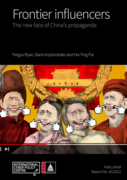
"This report explores how the Chinese party-state's globally focused propaganda and disinformation capabilities are evolving and increasing in sophistication. Concerningly, this emerging approach by the Chinese party-state to influence international discourse on China, including obfuscating its reco
...
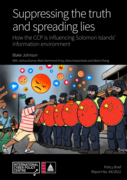
"This report highlights an emerging and continuously developing Chinese state information capability in Solomon Islands. That capability can be deployed to support the CCP’s objectives, which include undermining Solomon Islands’ existing relationships with foreign partners, particularly Australi
...
"In posts by Chinese diplomats, the US, NATO and the West were almost exclusively blamed or criticised for Russia’s unprovoked invasion of Ukraine. Russia was not specifically blamed. The most common posts shared news relating to the conflict (including readouts of Xi Jinping’s calls with world
...
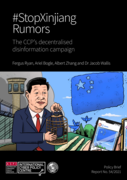
"This report analyses two Chinese state-linked networks seeking to influence discourse about Xinjiang across platforms including Twitter and YouTube. This activity targeted the Chinese-speaking diaspora as well as international audiences, sharing content in a variety of languages. Both networks atte
...
"This report explores how the Chinese Communist Party (CCP) uses foreign social media influencers to shape and push messages domestically and internationally about Xinjiang that are aligned with its own preferred narratives. Our research has found key instances in which Chinese state entities have s
...
"Any technology that can be used to generate false or misleading content, from photocopiers and Photoshop software to deep fakes, can be weaponised. This paper argues that policymakers face a narrowing window of opportunity to minimise the consequences of weaponised deep fakes. Any response must inc
...

"This report analyses a persistent, large-scale influence campaign linked to Chinese state actors on Twitter and Facebook. This activity largely targeted Chinese-speaking audiences outside of the Chinese mainland (where Twitter is blocked) with the intention of influencing perceptions on key issues,
...

"This report finds that the potential of ICTs to enable stronger governance, efective public service delivery and better government services is there. In all countries that are part of this study, critical foundational infrastructure is in place [...] But there’s still a lot to be unlocked. Increa
...
"The rapid escalation in the long-running conflict between Azerbaijan and Armenia which took place in late September 2020 has been shadowed by a battle across social media for control of the international narrative about the conflict. On Twitter, large numbers of accounts supporting both sides have
...
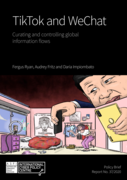
"The Chinese state has demonstrated a propensity for controlling and shaping the information environment of the Chinese diaspora—including via WeChat. The meteoric growth of TikTok has now put the Chinese Communist Party (CCP) in a position from which it can shape the information environment on a
...
"In this report, we’ve analysed samples of Twitter data relating to the online manifestation of contemporary political protests in Thailand. We’ve sought to explore key ways in which the online manifestation of the protests differs from its offline counterpart. That includes how power dynamics o
...